
Safety Huber Needle: Non-Coring Access and Pull-to-Shield Protection
Implanted port access is widely used for long-term intravenous therapy, chemotherapy and blood sampling. Two important considerations are protecting the port septum during repeated puncture and reducing exposure to the used sharp after needle withdrawal.
A Safety Huber Needle combines a non-coring needle tip with an integrated pull-to-shield mechanism. This article explains the product design, activation process, available specifications and OEM/ODM options offered by Mekon.
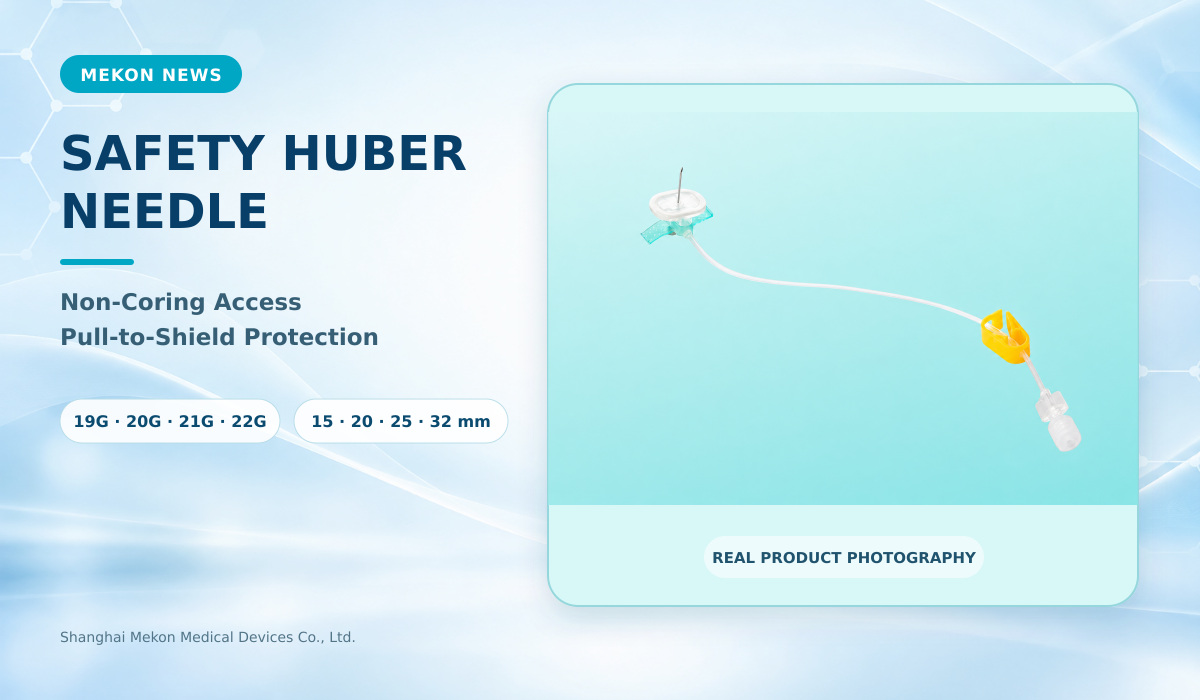
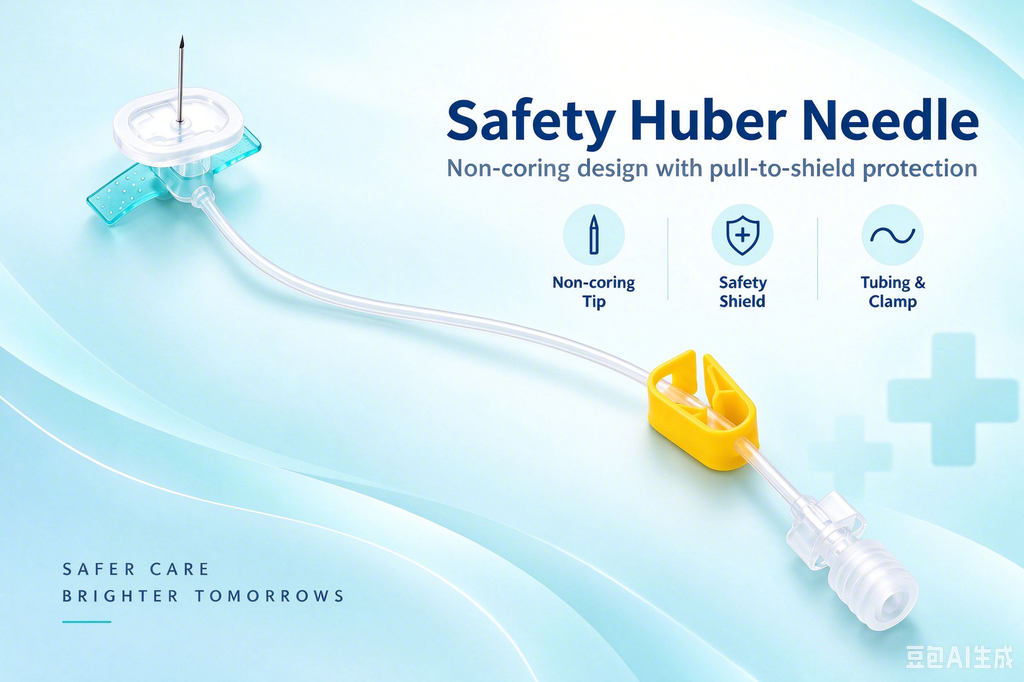
Safety Huber Needle with a non-coring tip and pull-to-shield protection mechanism.
01 Why Safety Huber Needles Matter
A conventional Huber needle uses a non-coring tip designed to separate rather than cut the silicone septum of an implanted port. After access, however, the withdrawn sharp must still be handled and disposed of safely.
A safety-engineered Huber needle adds a protective mechanism that shields the tip after withdrawal. This supports institutional sharps-injury prevention procedures while retaining the access characteristics required for implanted port therapy.
02 How the Pull-to-Shield Mechanism Works
Mekon’s Safety Huber Needle uses an active pull-to-shield mechanism. After the needle is withdrawn from the port, the user pulls the safety component so that the used sharp is contained within the protective housing.
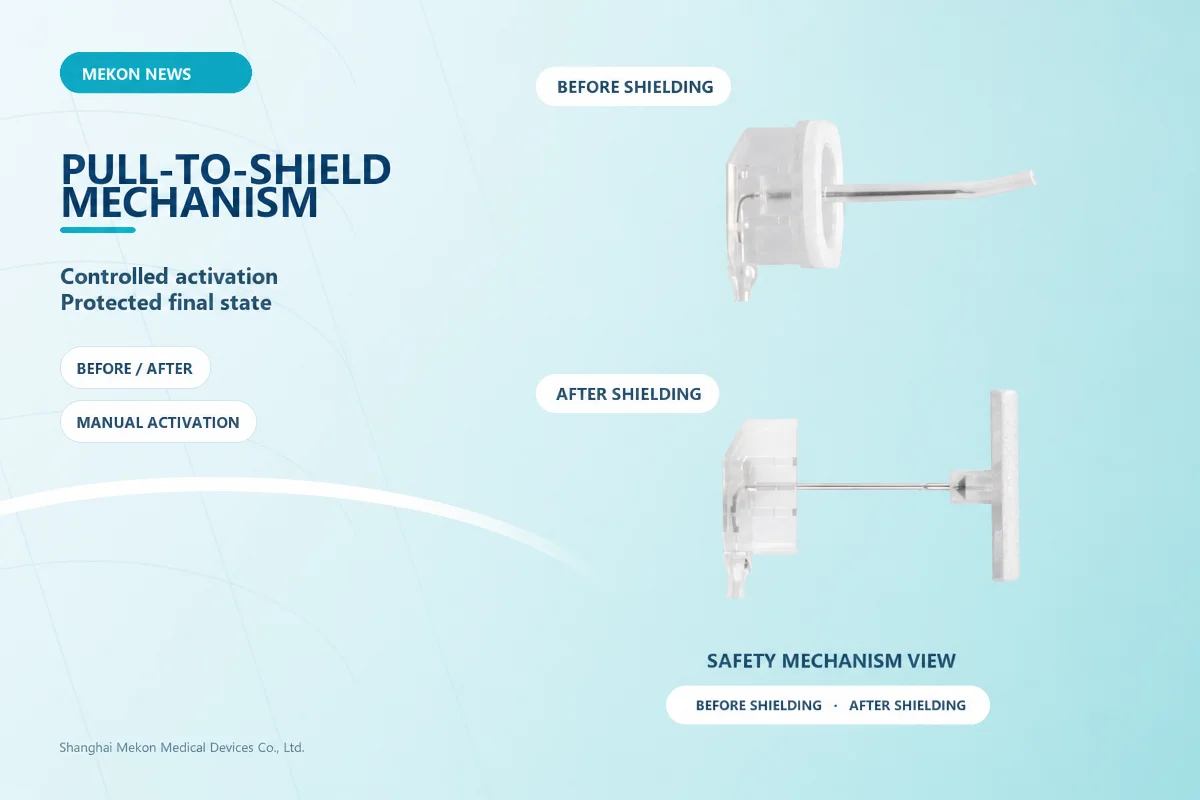
The pull-to-shield mechanism covers the needle after withdrawal.
Key design considerations include:
- Controlled activation: the pull action supports deliberate shielding after withdrawal.
- Protected final state: the needle tip is contained by the safety assembly.
- Compact access platform: the design supports stabilization and dressing around the implanted port.
- Configurable extension set: tubing, clamp and connector options can be reviewed for the intended workflow.
Users should follow the approved instructions for use and the healthcare facility’s sharps-disposal procedure.
03 Non-Coring Needle Tip Design
Unlike a conventional hypodermic needle, a Huber needle uses a non-coring tip geometry intended for repeated access through an implanted port septum. The tip is designed to reduce cutting and fragmentation of the silicone material during puncture.
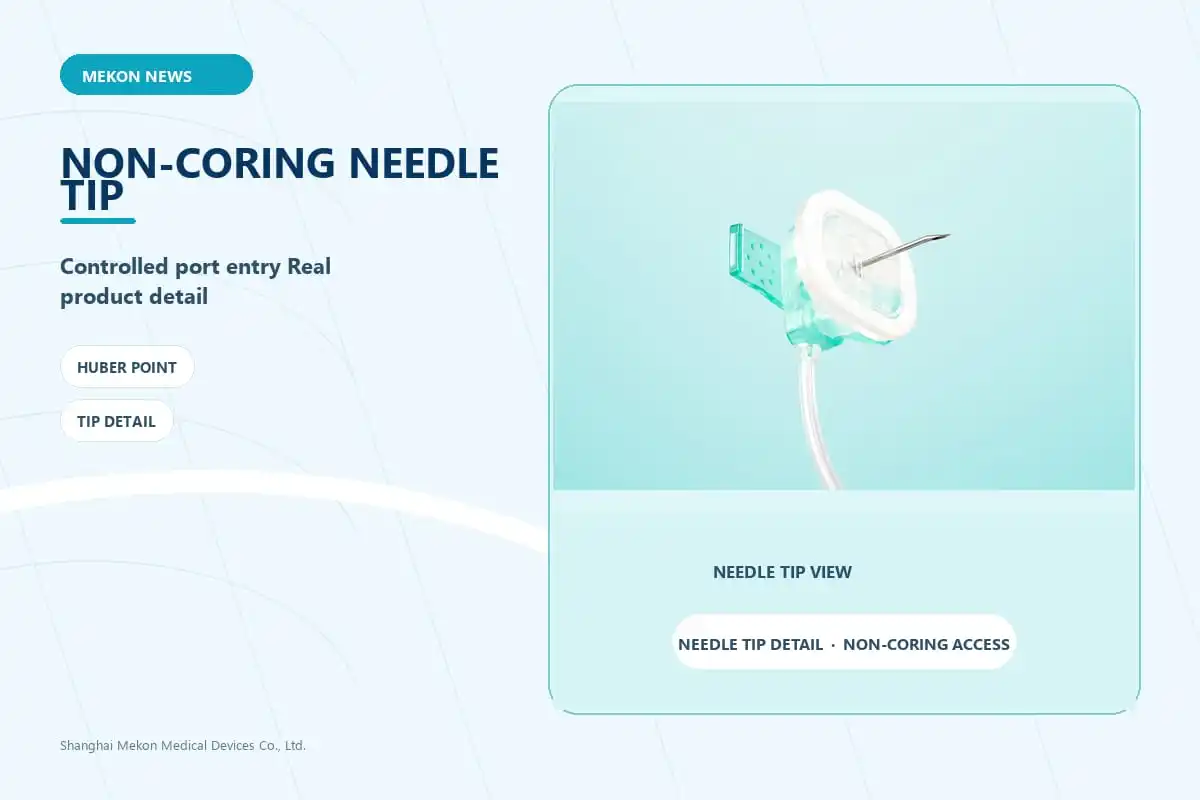
Close-up of the non-coring needle tip; the original product geometry is retained.
The available design options include:
- Long-bevel and short-bevel configurations
- Regular-wall and thin-wall cannula options
- Multiple gauges and needle lengths
04 Components and Configuration Options
A complete Safety Huber Needle extension set may include the non-coring needle, safety mechanism, tubing, slide clamp and connector. The final configuration should be confirmed according to the approved product specification.
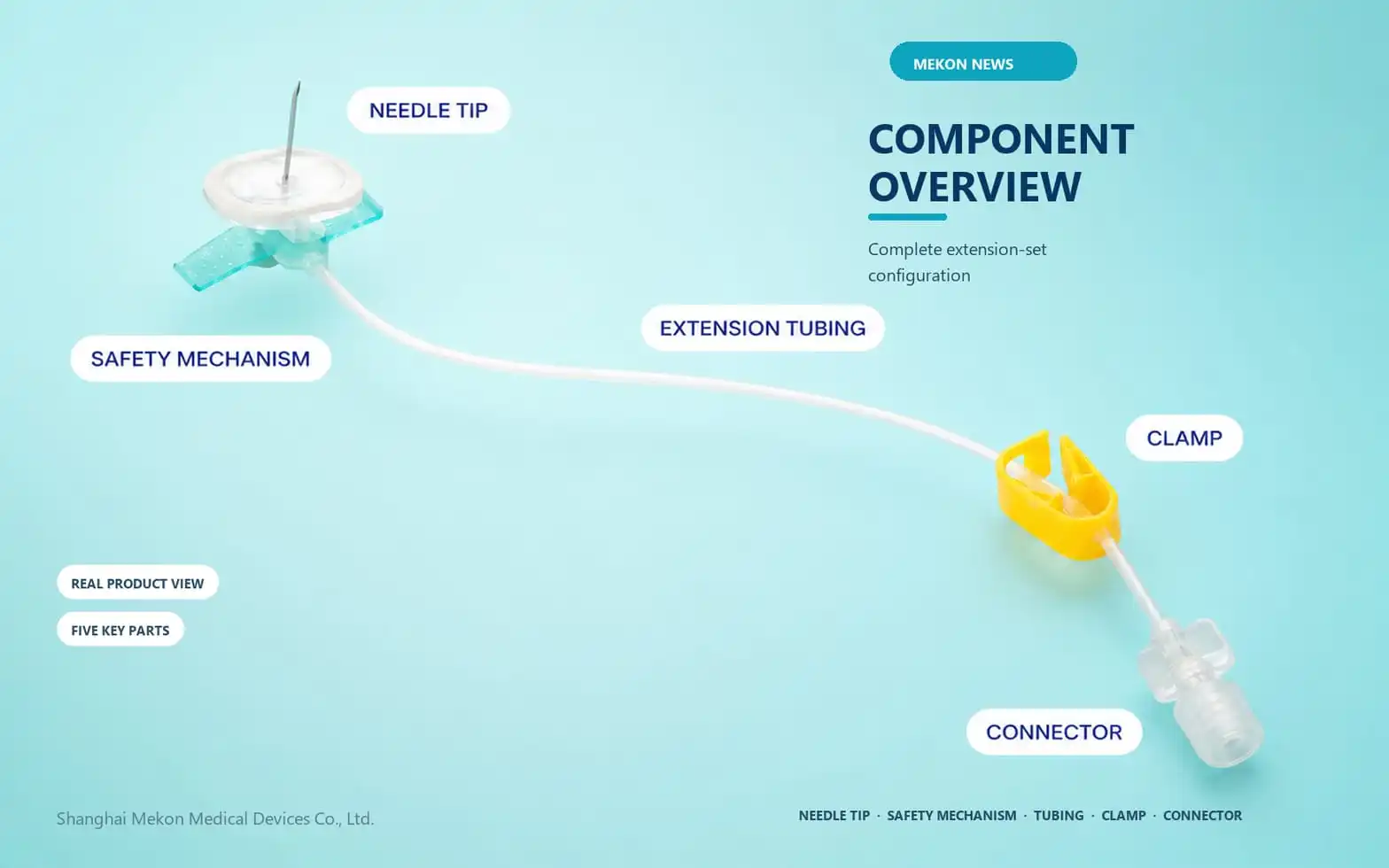
Main components: needle tip, safety mechanism, tubing, clamp and connector.
- Gauge: 19G, 20G, 21G and 22G
- Standard lengths: 15 mm, 19 mm and 25 mm
- Wall thickness: RW (regular wall) or TW (thin wall)
- Bevel: long or short
- Extension-set options: tubing length, clamp and connector configuration
- Project options: color coding, packaging and labeling
05 Safety Huber Needle Specifications
| Gauge | Color Code | Length (mm) | Wall Thickness | Bevel Angle | SHY REF | SHN REF |
|---|---|---|---|---|---|---|
| 19G | Cream | 15 / 19 / 25 | RW / TW | Long / Short | SHY19 | SHN19 |
| 20G | Yellow | 15 / 19 / 25 | RW / TW | Long / Short | SHY20 | SHN20 |
| 21G | Green | 15 / 19 / 25 | RW / TW | Long / Short | SHY21 | SHN21 |
| 22G | Black | 15 / 19 / 25 | RW / TW | Long / Short | SHY22 | SHN22 |
Normal sizes are shown above. Other sizes and configurations are subject to technical review and the approved product specification.
06 Manufacturing and Documentation Support
Mekon manufactures medical needles under an ISO 13485-certified quality management system. Production and inspection controls are established according to the approved product specification and applicable quality requirements.
Depending on the agreed project scope, supporting documentation may include:
- Product specifications and approved drawings
- Incoming, in-process and finished-product inspection documentation
- EO sterilization and packaging documentation for applicable sterile configurations
- Material and biological-evaluation information, where applicable
- Documentation support for the agreed target market
07 OEM/ODM Project Support
For distributors and medical-device brands, Mekon can evaluate customized Safety Huber Needle configurations based on an approved drawing, specification or reference sample.
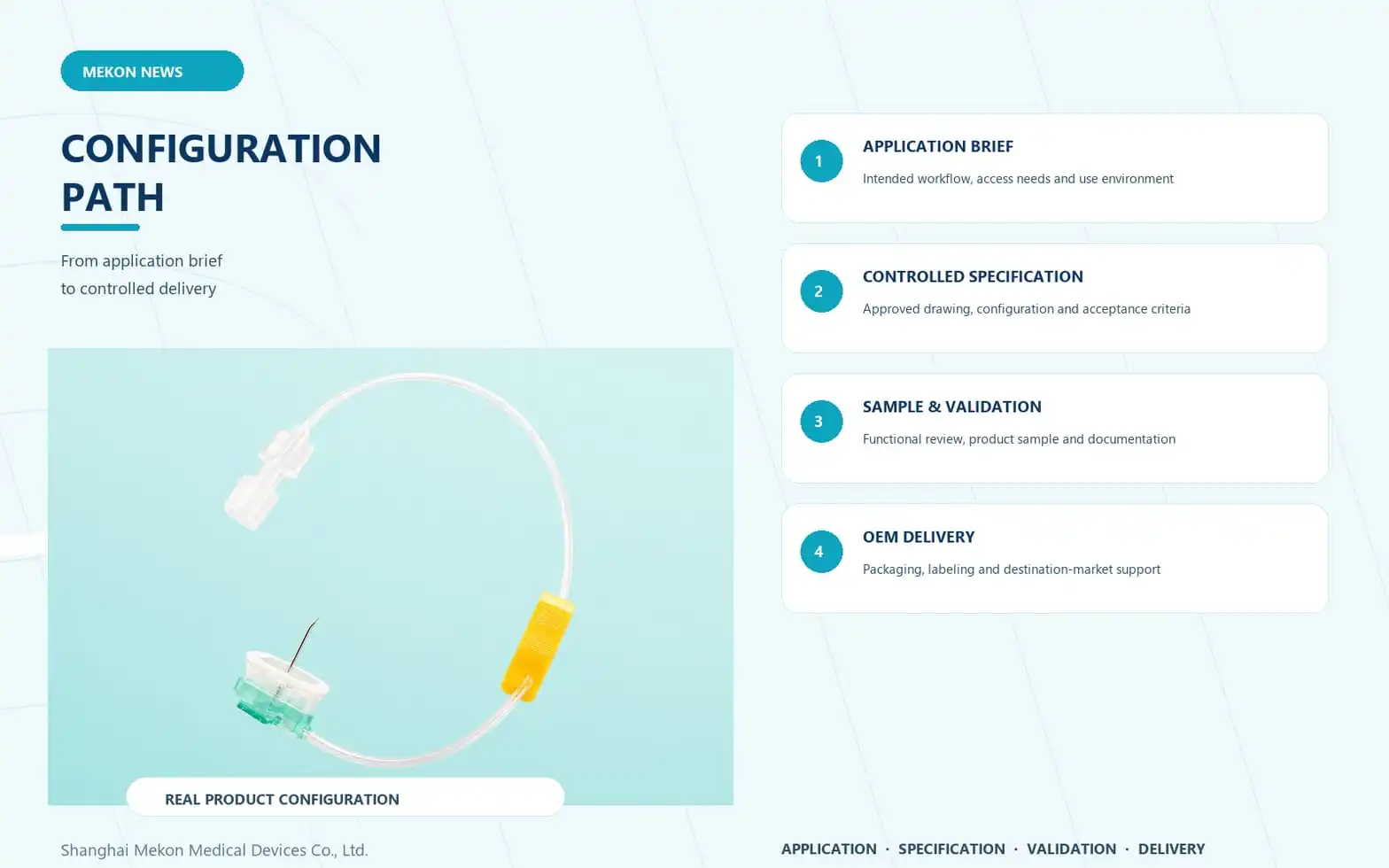
OEM/ODM options can cover gauge, needle length, tubing, clamp, connector, packaging and labeling.
- Gauge, length, wall thickness and bevel options
- Tubing, clamp and connector configurations
- Color coding, packaging and labeling
- Private-label and OEM/ODM project support
Frequently Asked Questions
What is the difference between a Huber needle and a standard hypodermic needle?
A Huber needle has a non-coring tip intended for implanted port septum access. A standard hypodermic needle uses a different bevel geometry and is not intended to perform the same port-access function.
Is the safety mechanism passive or active?
The illustrated Mekon design uses an active pull-to-shield mechanism. The user withdraws the needle and pulls the safety component to contain the tip.
Which gauges and lengths are listed as standard?
The current specification table lists 19G, 20G, 21G and 22G, with standard lengths of 15 mm, 19 mm and 25 mm.
Which REF families are available?
The specification table includes both SHY and SHN REF families. The final product configuration associated with each REF should be confirmed in the approved specification.