- Home
- Custom Cannula
- Metal Machining
- Products
- Catalog
- About Us
- Resources
- Contact Us
Please leave a message.
Finding a reliable automatic biopsy gun supplier that hospital teams can truly trust is going to become even more important in 2026. These days, when hospitals make procurement decisions, it’s not just about the price, quick delivery, or eye-catching catalogs. They're also looking at stuff like tissue quality, patient safety, staff training, device traceability, and how responsive the support team is.
Dr. Michael J. Wallace, a specialist in gastroenterology and endoscopy, once said, “The quality of tissue acquisition really determines how accurate the diagnosis will be.” That’s a solid point to start with. When you're vetting a supplier, ask them to explain things like needle compatibility, firing depth, how well specimens perform, sterilization status, and instructions for use. Also, don’t forget to request verifiable quality certificates, any relevant regulatory paperwork, and references from hospitals similar to yours. Take your time going through each document — details matter.
Even small things can make a big difference. For example, the biopsy gun should fit smoothly into your current imaging setup and procedural rooms. The trigger should feel controlled — not stiff or awkward. Packaging should arrive in good shape, with clear lot numbers and expiration dates. Also, make sure they offer proper training, plans for replacements, handles complaints properly, and maintain good communication, preferably in English.
You’ll probably come across product names like Rf Meso Gun along your search. But beware — product names can be a bit confusing or used inconsistently. Before comparing prices, double-check the exact model, the intended procedure, the manufacturer, and all the clinical documentation. Sometimes a cheaper quote might hide limited support or questionable availability — so take that into account.
Building a strong relationship with a trustworthy automatic biopsy gun supplier isn’t about promises — it’s about evidence and proof. This guide covers how to explore supplier directories, verify manufacturers, evaluate samples, prepare tender questions, and manage risks — all crucial as hospitals plan their sourcing for 2026. No checklist is foolproof, but a careful, disciplined approach to verification can help you avoid costly mistakes and choose the right partner for your hospital’s needs.
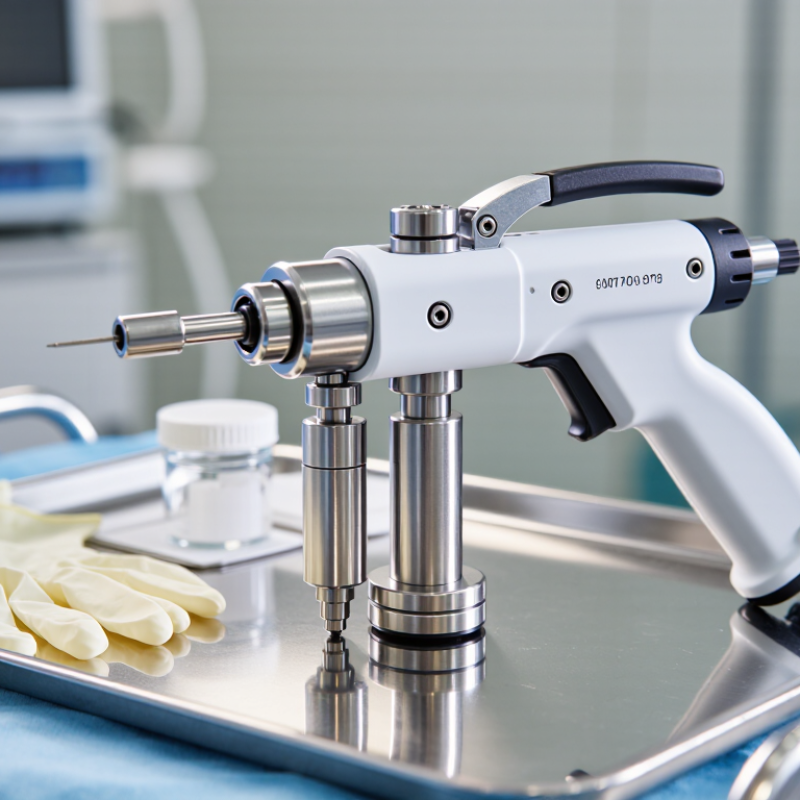
2026 How to Find Hospital Automatic Biopsy Gun Suppliers
Define Hospital Automatic Biopsy Guns and Their Clinical Uses
A hospital automatic biopsy gun is a handheld device that advances and retracts a biopsy needle with controlled force. It helps clinicians collect core tissue samples from suspicious masses or organs. Most systems use a spring-driven mechanism, while some use powered actuation. The device works with compatible needles, selected according to tissue depth, target size, and imaging guidance.
These guns are commonly used during ultrasound-, CT-, or MRI-assisted procedures. Clinicians may sample lesions in the breast, liver, kidney, prostate, or soft tissue. A clear trigger response can reduce hand movement during needle deployment. A sharp needle can also improve the chance of obtaining an intact core. Small details matter.
Clinical value depends on more than firing speed. Needle gauge, sample notch length, depth control, and tissue handling all influence specimen quality. Operators need practical training and a careful understanding of anatomy. No automatic device replaces clinical judgment. A fast mechanism may still produce a poor sample if the target is misidentified.
Hospitals evaluating a Custom Medical Needle Supplier should review sterilization records, material traceability, usability data, and technical support. Supplier documents should explain compatibility and maintenance requirements clearly. Independent clinical feedback is useful, but it may not reveal every limitation. Real-world assessment should include staff handling, imaging workflow, and specimen consistency. Performance is never perfect.
| Evaluation Dimension | Definition or Typical Specification | Clinical Uses | Supplier Verification Points | Procurement Relevance |
|---|---|---|---|---|
| Device Definition | A hospital automatic biopsy gun is a spring-loaded, trigger-activated core-biopsy instrument that advances a cutting needle into tissue and retrieves a cylindrical specimen. | Percutaneous sampling of lesions in organs such as the breast, liver, kidney, prostate, thyroid, and soft tissue. | Request the intended-use statement, instructions for use, technical file summary, and applicable regulatory documentation. | Confirms that the product is a core-biopsy device rather than a fine-needle aspiration system or aspiration-only needle. |
| Needle Gauge | Common core-biopsy sizes include approximately 14G to 18G; a lower gauge number indicates a larger needle diameter. | Larger cores are often selected when histology, immunohistochemistry, or architectural assessment is required. | Verify available gauge options, outer diameter, compatible coaxial needles, and the hospital’s specialty-specific protocols. | Gauge selection affects specimen volume, procedural access, and compatibility with imaging-guided kits. |
| Throw Length | Many automatic core-biopsy guns provide a fixed or selectable throw of about 15 mm or 22 mm, depending on the model. | A shorter throw may be useful where access depth is limited; a longer throw can support sampling of appropriately positioned lesions. | Confirm whether the throw is adjustable, the sampling notch length, firing force, and the minimum safe clearance required. | The throw must match lesion size, target depth, imaging technique, and operator preference. |
| Firing and Loading Mechanism | The mechanism stores spring energy and releases the stylet and cutting cannula in a controlled sequence after manual cocking and trigger activation. | Supports repeatable core acquisition during ultrasound-, stereotactic-, CT-, or other image-guided procedures. | Assess trigger consistency, safety lock, audible or tactile confirmation, loading steps, and resistance to accidental firing. | Simple, consistent operation can reduce handling variation and support staff training. |
| Breast Lesion Biopsy | Core biopsy is commonly used to obtain tissue from suspicious breast masses or calcifications before definitive treatment. | Ultrasound-guided breast mass sampling and stereotactic sampling of mammographic abnormalities, where clinically appropriate. | Check compatibility with breast-imaging procedures, coaxial systems, specimen radiography workflow, and clip-placement protocols. | The device should support adequate tissue quantity and reliable specimen handling. |
| Liver and Kidney Biopsy | Percutaneous core biopsy provides tissue for histopathology and, when required, ancillary testing. | Evaluation of diffuse liver disease, focal liver lesions, renal masses, and selected medical kidney conditions under appropriate imaging guidance. | Verify needle length, gauge range, coaxial access, hemostasis-related workflow, and compatibility with local infection-control procedures. | The selected configuration must provide safe access and specimens suitable for the laboratory’s testing requirements. |
| Prostate and Soft-Tissue Sampling | Automatic core systems can be used with appropriate needle assemblies for targeted or systematic tissue sampling. | Selected prostate biopsy procedures and sampling of superficial or deep soft-tissue lesions when clinically indicated. | Confirm procedure-specific compatibility, needle length, imaging-platform requirements, and availability of sterile accessories. | Procedure fit is more important than a universal configuration; hospitals may need several needle sizes. |
| Sterility and Reprocessing | Needles and patient-contact components are commonly supplied sterile and intended for single use; the reusable handle, if applicable, requires validated reprocessing. | Applies to all percutaneous procedures in which the device crosses the skin barrier. | Review sterilization method, shelf life, packaging integrity, single-use labeling, reprocessing instructions, and material compatibility. | Clear sterility and reprocessing requirements help control infection risk and operating cost. |
| Specimen Quality | A core specimen should preserve tissue architecture sufficiently for the requested pathology assessment, subject to lesion characteristics and technique. | Histopathology, grading, receptor or biomarker testing, and other laboratory investigations when clinically requested. | Ask for published performance data, sample photographs, laboratory feedback, and a controlled clinical evaluation rather than relying only on marketing claims. | Specimen adequacy is a key measure of clinical value and repeat-procedure avoidance. |
| Regulatory and Quality System | A supplier should provide documentation appropriate to the device classification and the target market, supported by a recognized medical-device quality system. | Relevant to hospital purchasing, clinical engineering review, risk management, and acceptance testing. | Verify current market authorization, quality certificates, declaration or certification documents, complaint handling, traceability, and post-market support. | Documentation reduces compliance risk and supports supplier qualification. |
| Supplier Selection Criteria | A qualified supplier should demonstrate product conformity, stable supply, technical support, transparent pricing, and effective complaint response. | Supports continuous availability for radiology, surgery, pathology, and interventional departments. | Compare lead time, minimum order quantity, batch traceability, training, warranty terms, replacement policy, tender responsiveness, and local service capacity. | A weighted evaluation should prioritize patient safety, clinical performance, compliance, and supply continuity over unit price alone. |
It is a handheld device that advances and retracts a biopsy needle with controlled force. It collects core tissue samples from suspicious areas. Small details matter.
Clinicians may use them during ultrasound-, CT-, or MRI-guided procedures. Common targets include the breast, liver, kidney, prostate, and soft tissue.
Define the target organ, tissue depth, needle path, and imaging method. Semi-automatic models offer manual loading and controlled deployment. Fully automatic models may improve workflow.
Review needle gauge, firing depth, sample-notch length, and acquisition consistency. Check compatibility with coaxial needles and imaging-guided systems. Common throws include 15 and 22 millimeters.
No. Needle sharpness, tissue handling, depth control, and target identification also matter. A fast mechanism can still produce a poor sample.
Test trigger consistency, handle balance, loading force, needle compatibility, and specimen quality. Use trained staff and approved procedures. Gloves reveal comfort problems.
Request specifications, instructions for use, sterilization information, material details, quality records, and traceability documents. Confirm every document matches the offered configuration.
Request itemized quotations covering devices, samples, shipping, taxes, accessories, and replacement parts. Include training and service costs. Low prices can hide later expenses.
Ask about response times, technical training, warranty coverage, spare parts, complaints, and corrective actions. Speak with clinical users, not only sales staff.
Records should include sample results, loading errors, unanswered questions, and internal concerns. Mistakes happen. Clear notes make weaknesses easier to detect and correct.
Finding the right automatic biopsy gun supplier hospital requires a structured review of clinical needs, product performance, and supplier reliability. Hospitals should first define the intended biopsy procedures and identify the appropriate gun type, needle size, firing mechanism, sample quality, and compatibility requirements. Clear technical specifications help ensure that the selected device supports accurate, efficient, and safe tissue collection across relevant departments.
Supplier evaluation should include manufacturing experience, quality management systems, certifications, product safety documentation, and compliance with applicable medical-device requirements. Hospitals should also compare production capacity, customization options, lead times, packaging, and delivery services. Before making a decision, procurement teams should request samples, detailed quotations, user instructions, validation documents, warranty terms, and after-sales support information. A structured assessment based on quality, safety, technical fit, total cost, and service responsiveness can help hospitals select a dependable supplier and establish a stable long-term supply relationship.