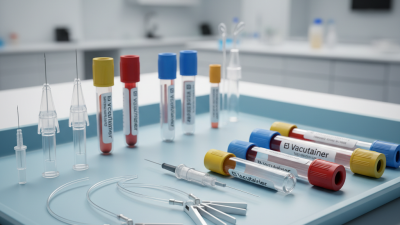
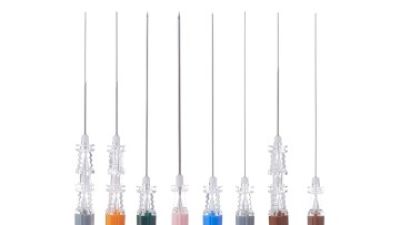
Picking out the best among the 7 top cosmetic injection needle OEMs isn’t just about comparing prices or flipping through catalog pics. A dependable supplier should show controlled manufacturing processes, consistent needle shapes, and clear traceability. Little things really matter — like a smooth hub, a sharp bevel, or a secure connection. These details might seem minor, but they actually affect how easy the needles are to handle, patient comfort, and the consistency of treatments.
As W. Edwards Deming, a well-known quality-management guru, once said, “Quality doesn’t come from inspection alone, but from improving how things are made.” That idea still rings true, especially in medical needle production. Good OEM partners should provide ISO 13485 certifications, detailed material info, biocompatibility data, sterilization validations, and batch records. They should also clearly explain options like gauge sizes, needle lengths, surface treatments, packaging choices, minimum order quantities, and lead times. A serious Custom Medical Needle Supplier will answer all these questions straightforwardly, no vague promises needed.
That said, no ranking is perfect. A supplier's performance can shift if they introduce new tooling, change subcontractors, or handle bigger orders. Some factories might offer shiny samples but stumble when it comes to producing consistent batches. Others might have great engineering but don’t support customization very well. So, instead of just relying on marketing hype, this guide looks at seven top OEM contenders based on real, practical sourcing factors. Factory audits, sample testing, and solid quality agreements are a must. The final decision should match your specific procedure, market needs, and clinical workflow. Sure, cost is important — but unreliable quality will end up costing you more in the long run. Sometimes, the quieter or less flashy supplier is actually the one to watch closely.
In the end, choosing a good partner isn’t just about price tags; it’s about trust and consistency. A reliable OEM can really make all the difference in your results and patient safety.
What Are Cosmetic Injection Needle Supplier OEMs?
Cosmetic injection needle supplier OEMs are manufacturers that design, produce, and package needles for another company’s label. They may customize gauge, length, bevel geometry, hub color, lubrication, and sterile packaging. The buyer owns the market-facing identity. The OEM manages much of the technical work.
This is more than private labeling. A capable OEM should provide material specifications, lot traceability, inspection records, and validated sterilization documentation. ISO 13485 supports a structured medical-device quality system, while ISO 10993 helps assess biological safety. ISO 7864 also defines requirements for sterile hypodermic needles. Ask for current certificates, not screenshots. Small details matter, such as a burr-free tip, secure hub fit, and consistent needle glide.
Market demand is expanding with aesthetic procedures. Grand View Research estimated the global aesthetic medicine market at USD 18.94 billion in 2022, with a projected 14.5% compound annual growth rate from 2023 to 2030. That growth increases pressure on OEM suppliers to deliver stable volumes and repeatable quality. Still, market growth does not prove manufacturing competence. A glossy catalog can hide weak validation. Request sample lots, dimensional reports, packaging studies, and complaint-handling procedures. Test several production batches when possible. One sample is not enough.
How to Evaluate Cosmetic Injection Needle Manufacturers
When comparing seven cosmetic injection needle OEMs, evaluate the process, not the polished sample. A reliable Medical Device Oem should provide material certificates, lot traceability, and dimensional inspection records. Check needle length, outer diameter, bevel geometry, hub fit, and silicone residue. Under magnification, the bevel should look clean and even. Tiny burrs matter.
The WHO Global Patient Safety Action Plan reports that about one in ten patients experiences harm during healthcare, with more than half considered preventable. This makes sterility evidence essential. Request sterilization validation, packaging integrity tests, shelf-life data, and biocompatibility documentation. The FDA’s Quality Management System Regulation, effective February 2, 2026, incorporates ISO 13485:2016 requirements. Suppliers should therefore demonstrate controlled production and corrective-action procedures.
Audit communication, too. Can the manufacturer explain a failed leakage test without hiding behind vague language? Ask for pilot-run records, acceptance criteria, and change-control procedures. Confirm whether production staff inspect every critical feature or only sample batches. A low quotation may reflect thinner documentation, not better efficiency. I would not trust attractive needles without traceability. One weakness remains: remote audits can miss poor housekeeping, rushed assembly, or inconsistent operator training. Request a live video audit, then verify the evidence against independent test results.
Seven Leading OEM Suppliers for Cosmetic Injection Needles
Selecting among seven leading OEM suppliers for cosmetic Injection Needles requires more than comparing unit prices. The strongest options usually include a precision cannula maker, a sterile needle specialist, a micro-gauge manufacturer, and a custom molding partner. Other valuable choices include a low-dead-space designer, a private-label medical device factory, and a high-volume regional producer. Each supplier serves a different production need.
An experienced buyer should inspect bevel consistency, shaft straightness, hub fit, and protective-cap security. A clean sample should slide smoothly into its matching syringe. The needle should not wobble. Ask for documented material specifications, batch traceability, sterilization validation, and quality-system certification. Confirm whether the Injection Needle design supports the intended cosmetic procedure and local regulatory requirements. Small details matter, especially when practitioners handle hundreds of units weekly.
Factory audits can reveal more than polished catalogs. Check cleanroom behavior, packaging seals, inspection records, and complaint handling. Request pilot samples before approving mass production. Some suppliers communicate well but struggle with tight tolerances. Others offer excellent machining yet provide weak documentation. That is a real risk. My own evaluation would not rely on one successful sample; repeated batches deserve testing. A careful OEM partnership grows through transparent records, controlled changes, and honest discussion of defects.
7 Best Cosmetic Injection Needle Supplier OEMs? - Seven Leading OEM Suppliers for Cosmetic Injection Needles
| Supplier Profile |
OEM / Private-Label Support |
Common Needle Formats |
Typical Gauge Range |
Typical Length Range |
Sterilization & Packaging |
Quality Documentation |
Best-Fit Buyer |
| OEM Profile 01 |
Available
Custom labels, cartons, and pouch artwork subject to order quantity. |
Hypodermic needles, mesotherapy needles, and multi-needle tips. |
27G–33G |
4 mm–13 mm |
Ethylene oxide sterilization; individual peel-open pouches commonly available. |
Batch traceability, certificate of analysis, and sterilization records. |
Clinics and distributors requiring fine-gauge facial treatment needles. |
| OEM Profile 02 |
Available
Logo printing and private-label packaging can be specified during quotation. |
Standard injection needles, blunt-tip cannulas, and specialty cosmetic tips. |
18G–30G |
25 mm–70 mm |
Ethylene oxide or validated alternative; pouch, blister, and bulk packaging options. |
Material certificates, dimensional inspection, and lot-release records. |
Importers seeking a mixed range for fillers and injectable procedures. |
| OEM Profile 03 |
Available
Packaging configuration and labeling language may be customized. |
Ultra-fine needles, short-bevel needles, and low-dead-space formats. |
30G–34G |
4 mm–8 mm |
Single-use sterile packaging with protective needle caps. |
Visual inspection, penetration testing, sterility documentation, and lot coding. |
Aesthetic practices focused on precision and reduced tissue trauma. |
| OEM Profile 04 |
Available
Custom product codes, carton quantities, and multilingual labels supported. |
Hypodermic needles, dental-style needles, and injection accessories. |
25G–32G |
13 mm–38 mm |
Ethylene oxide sterilization; individual pouch and box-in-pouch formats. |
Quality-management records, incoming-material inspection, and final inspection reports. |
Regional wholesalers needing standardized, high-volume SKUs. |
| OEM Profile 05 |
Available
Private-label production generally requires approved artwork and minimum quantities. |
Mesotherapy needles, micro-injection needles, and needle sets. |
27G–32G |
4 mm–13 mm |
Sterile, single-use pouches with optional multi-unit cartons. |
Packaging validation, sterility certificates, and production-lot traceability. |
Beauty-device companies developing branded treatment kits. |
| OEM Profile 06 |
Available
Custom colors, hub specifications, and labeling may be negotiated. |
Safety needles, standard injection needles, and cannula-compatible formats. |
21G–32G |
13 mm–50 mm |
Individual sterile packaging; protective caps and tamper-evident cartons available. |
Dimensional reports, material declarations, and sterilization-cycle records. |
Healthcare distributors requiring broader gauge and length coverage. |
| OEM Profile 07 |
Available
Suitable for sampling, pilot production, and established private-label programs. |
Fine-gauge cosmetic needles, flexible cannulas, and procedure-specific sets. |
25G–33G |
6 mm–90 mm |
Single-use sterile pouches; box quantities and labeling can be adapted. |
Product specifications, batch records, sterility evidence, and complaint-tracking support. |
International buyers comparing customized aesthetic-injection portfolios. |
Note: Gauge, length, sterilization method, minimum order quantity, regulatory documentation, and private-label options vary by product configuration and destination market. Buyers should verify current specifications, certificates, and regulatory eligibility directly before placing an order.
What Customization Options Do OEM Needle Suppliers Provide?
7 Best Cosmetic Injection Needle Supplier OEMs: What Customization Options Do OEM Needle Suppliers Provide?
OEM cosmetic injection needle suppliers can tailor products for different clinical applications, packaging needs, and purchasing models. Common options include needle gauge, length, wall thickness, bevel design, and hub geometry. These details affect handling, flow, insertion feel, and compatibility with approved devices.
Suppliers may also customize hub colors, surface finishes, protective caps, and connection types. Some offer private-label packaging, serialized cartons, multilingual instructions, and tamper-evident seals. Packaging can include individual blister packs or small procedure-ready trays.
Small differences matter. A clear label can prevent costly warehouse mistakes.
Reliable OEM evaluation requires more than a sample review. Ask for material certificates, dimensional reports, biocompatibility evidence, sterility validation, and traceability records. Quality systems aligned with recognized medical-device standards provide stronger oversight.
In practice, specifications often change after handling tests. That is normal, but every revision should be documented and revalidated. One weakness in many projects is focusing on price before confirming inspection controls. A professional supplier should explain tolerances clearly, identify limitations, and avoid promising performance without evidence.
Which Quality Standards and Certifications Matter Most?
Choosing a cosmetic injection needle OEM requires more than a polished catalog. Certification should match the needle’s real clinical risk.
ISO 13485 is a practical starting point. It evaluates the manufacturer’s quality management system, not just one product. Ask for a current certificate and verify its scope. It should cover sterile, single-use needles. ISO 7864 addresses sterile hypodermic needles, including dimensions, performance, and packaging. ISO 10993 testing helps assess biological safety, such as irritation and sensitization. A
Safety Injection Needle
should also show validated sterilization evidence, usually supported by ISO 11135 or ISO 11137 records.
Look closely at batch controls. The 2023 ISO Survey reported more than 1.2 million ISO 13485 certificates worldwide, yet certification alone does not prove consistent needle quality. That number shows adoption, not excellence. Request lot-specific certificates, sterilization cycle records, and a certificate of analysis. Check whether the supplier measures burrs, tip sharpness, cannula strength, and leakage. The 2024 Global Medical Device Overview from industry analysts placed the medical device market above 500 billion dollars, increasing pressure for faster, cheaper production. That pressure can expose weak inspection practices. I would personally test several lots, not only the first samples. The uncomfortable truth is simple: paperwork may look complete while the needle feels rough in actual use. Avaliable evidence should guide the final decision.
How to Compare Pricing, Production Capacity, and Delivery
Comparing cosmetic injection needle OEMs requires more than checking the unit price. Request a cost breakdown for cannula, hub, packaging, sterilization, testing, tooling, and freight. A supplier quoting $0.08 less may charge higher mold fees or require a larger minimum order. Compare total landed cost, not the first quotation.
Production capacity must be verified with evidence. Ask for monthly output, validated batch size, equipment availability, defect rates, and recent delivery records. ISO’s 2023 Survey reported more than 29,000 ISO 13485 certificates worldwide, but certification alone does not prove reliable capacity. Request production schedules, inspection records, and sample traceability. Capacity claims can be optimistic. I have seen spreadsheets look stronger than factory floors.
Delivery depends on more than manufacturing time. The World Bank’s 2023 Logistics Performance Index shows significant differences in customs, infrastructure, and shipment reliability between markets. Ask for standard and expedited lead times, Incoterms, safety-stock options, and on-time-in-full performance. Confirm whether sterilization and final inspection are included in the stated timeline. A two-week production promise may become six weeks after export clearance.
Tips: Compare three written quotations using the same specifications. Check needle gauge, length, bevel design, connector fit, packaging, and sterilization method. Ask for a pilot order before committing to annual volume. Include penalties or corrective-action procedures for late delivery and nonconforming batches. Keep a small buffer for regulatory review, seasonal demand, and transport delays.
What Should Buyers Check Before Choosing an OEM Partner?
Before choosing an OEM partner, buyers should inspect the quality system, not only the product sample. The WHO estimates that one in ten patients is harmed during healthcare delivery, with more than half of the harm considered preventable. That figure makes traceability essential. Ask for ISO 13485 certification details, batch records, complaint procedures, and documented corrective actions. Do not accept a certificate without checking its scope and expiry.
For a Blunt Cannula Filler Injection, examine tip geometry, wall thickness, flexibility, connection strength, and particle control. Request test reports covering biocompatibility, sterility, endotoxin, packaging integrity, and shelf-life stability. ISO 10993 testing should match the device’s actual patient contact. Sterilization validation should also identify the validated load, cycle, and routine monitoring method. A glossy sample proves little.
Audit the factory floor. Check calibration labels, environmental controls, incoming-material inspection, and operator training records. Ask how design changes are approved and communicated. Can the supplier provide retained samples from every batch? Can it explain a failed test without hesitation?
I would not trust a perfect factory tour alone. Visit again, if possible. Small inconsistencies matter. Buyers should compare production capacity with forecasted demand, minimum order quantities, lead times, and contingency plans. A cheaper quotation may conceal weak inspection, unstable materials, or delayed corrective action. This is where careful questions outperform attractive brochures.
Spinal Needle Pencil Point with Introducer Needle: Design, Benefits, and Clinical Applications
A spinal needle with a pencil-point tip and introducer needle is designed to support controlled access during spinal anesthesia, diagnostic lumbar puncture, and selected intrathecal procedures. The introducer helps guide the spinal needle through the skin and reduces the risk of needle deflection during insertion. Its distinctive tip is engineered to separate rather than sharply cut dural fibers, while the thin-walled tube promotes a high flow rate for efficient cerebrospinal fluid collection or medication delivery. The 6:100 hub connection provides secure compatibility with appropriate accessories.
The needle is sterile, latex-free, and non-pyrogenic for use in clinical environments where reliable safety and handling are essential. It is available in sizes from 18G to 27G, with lengths ranging from 30 to 180 mm to accommodate different patient anatomies and procedural requirements. The transparent hub allows clinicians to observe cerebrospinal fluid discharge more easily, helping confirm needle placement. For quick identification, the stylet hub is color coded according to needle diameter, supporting efficient selection during preparation and reducing the chance of choosing an unsuitable size.
FAQS
: An OEM supplier designs, manufactures, and packages needles under another company’s label. The buyer manages the market identity. The supplier handles technical production.
Custom options may include gauge, length, bevel shape, hub color, lubrication, and sterile packaging. Small changes can affect handling. Confirm every specification in writing.
Request material specifications, lot traceability, inspection records, and sterilization validation documents. Ask for current certificates. Screenshots are not enough.
ISO 13485 covers the quality management system. ISO 7864 addresses sterile hypodermic needle requirements. ISO 10993 supports biological safety assessments. Sterilization records should match the chosen process.
No. Certification shows system compliance, not perfect production. A certificate cannot reveal every rough tip. Test repeated lots before approval.
Check tip sharpness, bevel consistency, shaft straightness, hub fit, and cap security. The needle should not wobble in its matching syringe. A smooth glide matters.
One successful sample may hide later variation. Request pilot lots and dimensional reports. Testing several batches gives stronger evidence.
An audit may show cleanroom practices, packaging seals, inspection habits, and complaint handling. Look beyond polished catalogs. Records often tell the harder story.
Compare documented quality, tolerances, production capacity, communication, and change control. Do not compare unit prices alone. Cheap production can become expensive after defects.
Ask whether the design suits the intended procedure and local requirements. Confirm materials, sterilization, packaging, traceability, and defect handling. I would not approve production after one good sample.
Conclusion
Choosing the right cosmetic injection needle supplier OEM is essential for reliable product performance, patient comfort, and consistent manufacturing. This guide explains what an OEM supplier does and how buyers can assess manufacturers through production experience, material quality, engineering capabilities, regulatory readiness, and quality-control systems. It also presents seven leading supplier categories and comparison points without focusing on specific brand names.
Readers will learn about customization options such as needle dimensions, tip design, hub structure, packaging, labeling, and private specifications. The article also reviews important quality standards and certifications, then compares suppliers by pricing, production capacity, minimum order quantities, lead times, and delivery reliability. Before selecting a cosmetic injection needle supplier oem, buyers should verify samples, testing records, traceability, communication practices, after-sales support, and the supplier’s ability to maintain stable quality during large-scale production.